Physics Tournament
A physics research lab for talented middle and high schoolers in the US, one open IYPT problem each
In-person in Princeton, NJ · or hybrid from anywhere in the US
The Opportunity
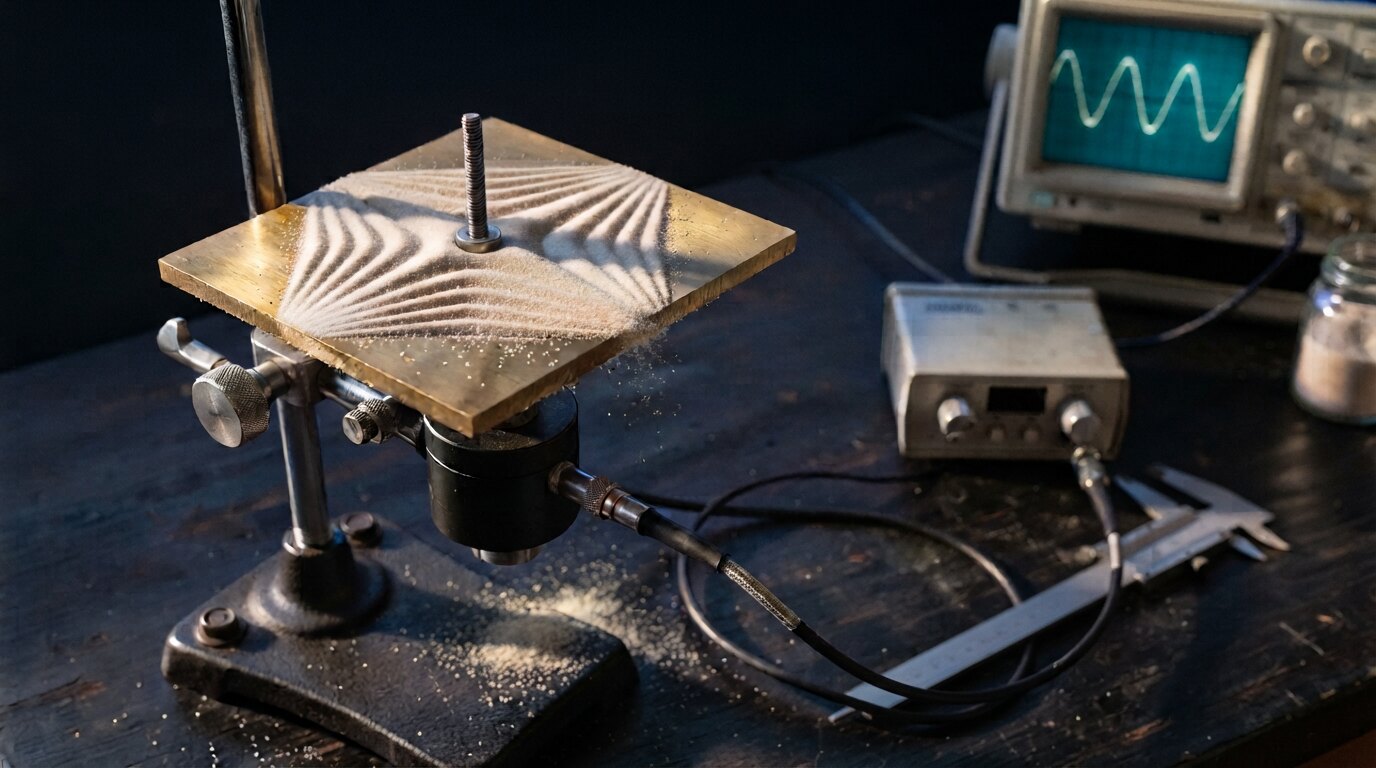
Each year the IYPT publishes seventeen open-ended physics problems with no answer to look up. You take one and pursue it through theory, experiment and simulation as far as it will go: building apparatus, developing a model, testing it against your own data, and defending the result to people who will look for the gaps. How deep a problem goes is discovered, not assigned.
This is the one SoTS lab where the question does not come from you. In every other lab finding the question is most of the work; here the field is fixed by the tournament's problem set and all of your effort goes into answering one problem completely. The seventeen problems for IYPT 2027 were published in July 2026, and this cohort works from that set. Read them at the official source.
Physics Tournament is one of the SoTS Research Labs and follows the same methodology and format, but it runs independently of all the others: its own problem set, its own cohort, and a year set by the tournament calendar. See Princeton Labs for how semesters work and expectations from students participating in the program.
The Tournament
Selection for the US team runs in March, judged on a PDF of your slides and a 12-minute video, one student per problem. From there the road leads to IYPT 2027 in Auckland, New Zealand, from 5 to 12 July 2027: the 40th edition, hosted at the University of Auckland, bringing together nearly 200 students from more than 35 countries.
Videos: IYPT 2026 Aftermovie by the Swiss Young Physicists' Tournament, and IYPT 2025 FINAL by IYPT Sweden.
The tournament and its hosts
- The tournament has run since 1988, moving to a new host country each year: Sweden in 2025, ETH Zurich in 2026, Auckland in 2027
- The tournament year opens in September and concludes in July. Students aiming for selection typically take both semesters
- USIYPT.net covers US selection, and IYPT.org is the official international site
Prerequisites and Requirements
Open to high school and middle school students in the US with a year of physics behind them. Each problem belongs to one student for the year. No prior research experience is required, and admission is selective, based on physics ability.
Full requirements
- One year of physics study, from school, self-study, or the Physics Lyceum. At admission we assess your ability to reason from first principles
- US residency. The path to the tournament runs through US selection
- One student per problem. Everyone in the cohort has their own problem and presents their work to the others, so nobody should expect to pick up someone else's solution. A problem is claimed by one student for the year, you submit only your solution for a chosen problem, and we notify the US qualification team which problems students in our labs are working on
- Willingness to commit to one problem for the full year and present it to peers
- Commitment to weekly meetings and work between sessions
Schedule, Tuition, and Enrollment
Pass the SoTS membership fit evaluation and be accepted as a member before requesting to join a Research Lab. Lab prerequisites and available places also apply.
Schedule, tuition, and enrollment