Modern Physics
Advanced standalone electives of the high school Physics Lyceum, beyond what a typical high school curriculum reaches.
Online from anywhere · or in-person in Princeton, NJ
- Each course
- Theory, problem-solving sessions, and homework, at a faster pace and a greater conceptual depth than the classical core.
- Formats
- In-person in Princeton, hybrid (one weekly session in person, one online), or online from anywhere.
- Length
- Three semesters a year: 16-week courses in fall and spring, an accelerated 8-week version in summer.
- Weekly commitment
- Two 1.5-hour sessions a week, plus roughly 4–6 hours of problem-solving on your own.
- Selective admission
- New to Lyceum classes? Investigate an everyday physical phenomenon and discuss your explanation in an admission interview. $100, nonrefundable.
- Tuition
- $5,500 per course, whichever semester you take it in.
Taught by expert physicists. Meet the instructors.
Enrollment and Tuition
If you have never taken a Physics Lyceum class, choose a phenomenon you observe in the world around you, investigate its physics, and prepare a short explanation. Discuss what you observed, the evidence for your explanation, and what you still want to understand in an admission interview. We look for deep curiosity and thoughtful reasoning.
The interview fee is $100, separate from tuition and nonrefundable. Paying for the interview does not guarantee admission. Email team@teenscientists.org to arrange it. Returning Lyceum students do not need this interview or pay its fee. Course prerequisites apply to all students.
Tuition
- $5,500per course
- Semesters
- 16 weeks in fall or spring, or an accelerated 8-week summer version
- Where
- In-person in Princeton, NJ, or live online from anywhere
- Cohort
- Up to 12 in person or hybrid, up to 8 online
- Admission
- Interview required only if you have never taken a Lyceum class
Confirm admission and your course place before paying tuition. The interview fee is separate and nonrefundable.
Payment and refunds
- Course tuition is due at enrollment. These refund terms apply to tuition.
- We cancel, or the minimum cohort does not form: full tuition refund
- You cancel 1+ week before the start: full tuition refund
- You cancel less than 1 week before: no refund
What the Modern Electives Are
Four semester-long electives in the Physics Lyceum: High School curriculum, taught on the Deep Physics model that runs through the whole SoTS Physics Lyceum. They go beyond the topics a typical high school curriculum reaches, which the classical core handles.
A step up in pace and depth. These are advanced classes and they move faster than the classical core: more ground in a session, and ideas that sit further from everyday intuition than anything in classical physics. A student comfortable in a core course should expect to work harder here.
The landmark experiments carry the reasoning. Discussion of the experiments that forced physicists to accept each result, and what each one actually established.
Each elective has unique requirements. Each course page carries its own Texts and Requirements section, stating the book it works from and the maths it expects.
The Four Electives
Modern physics electives
4 coursesPrerequisites
Grade: open to students in grades 9–12.
Math: algebra, geometry, and basic trigonometry as a floor. Beyond that each elective differs, and each course page states its own.
Physics: prerequisite courses can be completed in the SoTS Physics Lyceum or elsewhere.
Certificates and Transcripts
Tuition covers the teaching and one in-person Pass/Fail evaluation. The evaluation is optional. After completing a course, a student may schedule it with the instructor. It may include solving problems and a conversation with the instructor about the course material. It may also take into account homework and classwork grades from the course. A passing evaluation earns a Lyceum Course Certificate in that course. Every enrolled student also has a cumulative transcript listing their coursework, research, and any certificates earned, useful for any student demonstrating substantial physics study on a college application.
Any two of the four electives, added to the classical core, earn Mastery in Classical and Modern Physics. See Certificates and Transcripts for the full credential structure and requirements.
Lyceum courses are taught by expert physicists. Meet the team.
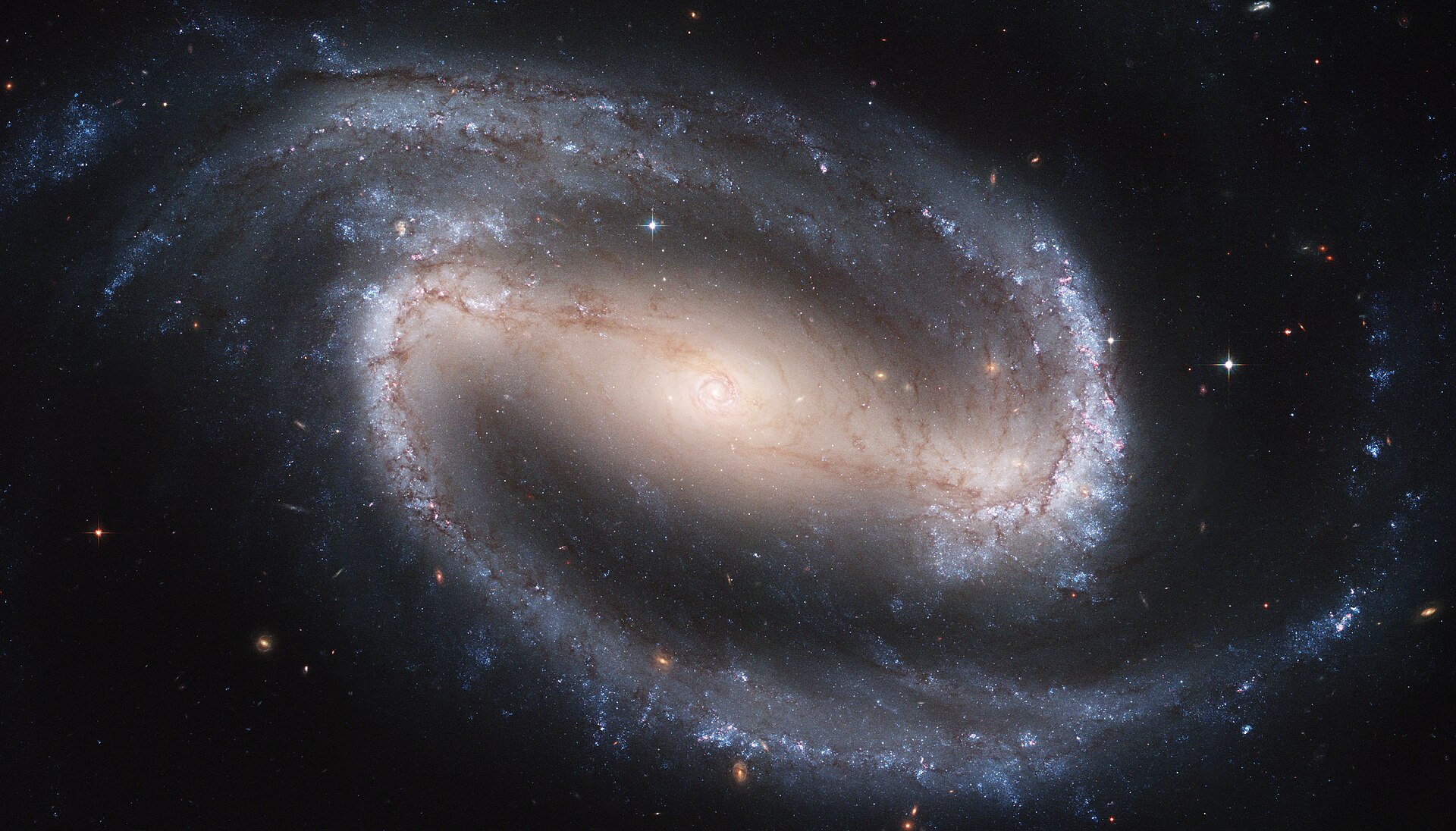
Image on top of page: the barred spiral galaxy NGC 1300, imaged by the Hubble Space Telescope. NASA/ESA/STScI