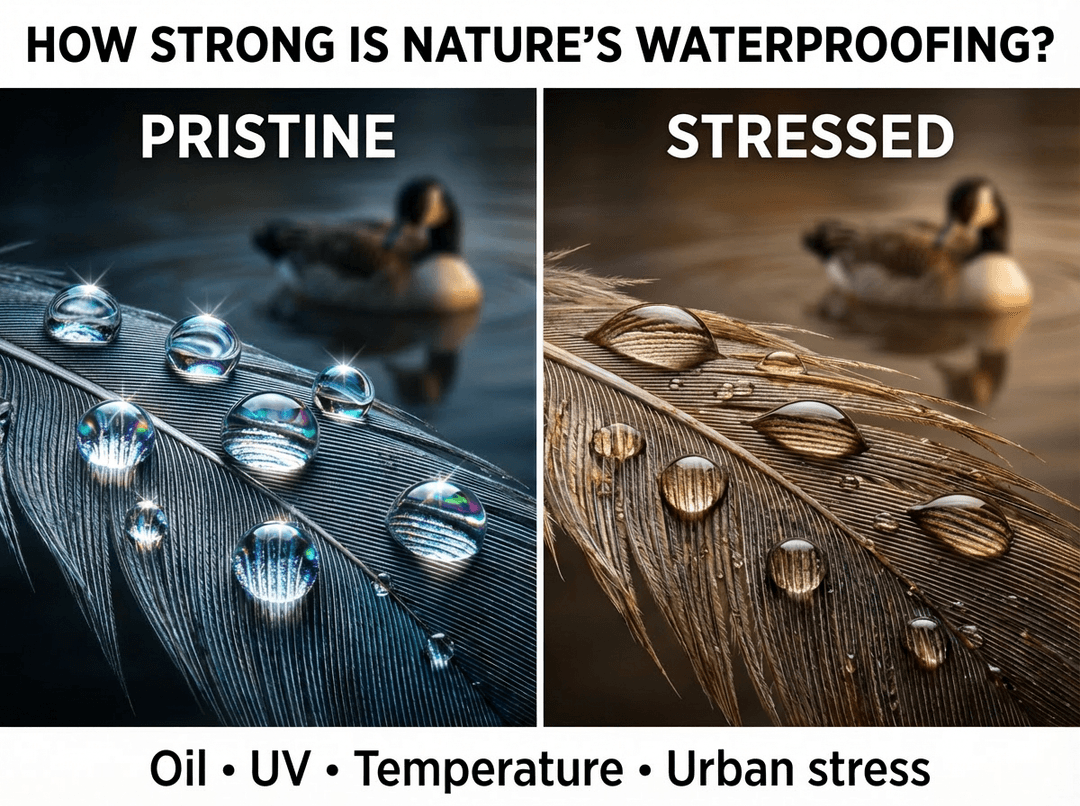
Drop water on a feather. It bounces. Perfect sphere. The surface stays dry. The layers underneath stay warm.
Now contaminate that feather and try again. The sphere flattens. Water seeps through. The insulation fails. Cold water reaches skin.
The Challenge
Can you map exactly where protection breaks down?
How much oil? How long under UV? How many freeze-thaw cycles? Which species hold out longest? Can damaged feathers self-heal - and what's the recovery curve?
The Gap
Scientists have studied individual stressors. But comprehensive comparative data - tracking multiple environmental factors across species and time scales using standardized methods - remains limited. Most studies focus on oil spills or single species under lab conditions.
Why It Matters
This is the inverse problem wildlife rescuers face after every spill: How damaged? How fast? Can they recover?
Build systematic comparison data with feathers, water, and patience - and you're filling gaps that could inform which birds survive our changing world.
Research pathways: Oil • UV • Temperature • Urban stress
Measurements needed: Contact angles • Degradation rates • Recovery timelines
Potential impact: Refined rescue protocols • Species vulnerability data