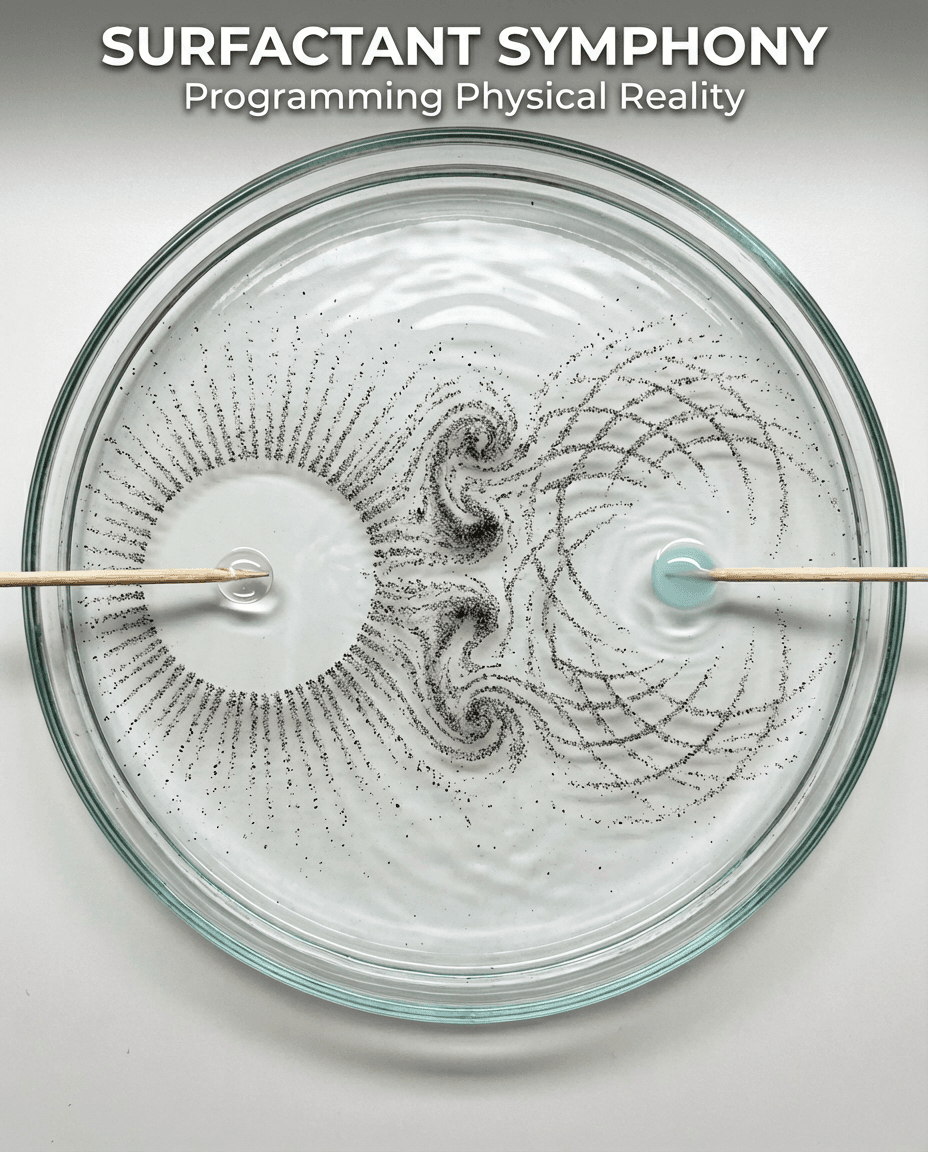
Scatter pepper across water. Touch with soap-tipped toothpick. BOOM - particles explode outward! But what if you could program where they go?
The Challenge
Scientists know one drop creates radial patterns. But two drops? Three? Different soaps in sequence?
Few have explored whether you can "program" 2D patterns by choosing:
- Which surfactants (dish soap vs. shampoo)
- When you add them (simultaneous vs. sequential)
- Where you place them (spacing, geometry)
Your Mission
Create a "surfactant alphabet" that programs matter. Discover if sequences produce predictable patterns or chaos.
Why It Matters
Understanding programmable self-assembly opens doors to better water treatment, targeted drug delivery, and smart materials. But first - we must discover if and how this programming actually works.
What Makes This Novel
Most pattern-control research needs expensive lasers or microfluidic chips. You'll use dish soap to explore temporal programming - a largely unexplored approach using everyday materials.
Can we write instructions in chemistry that matter obeys?